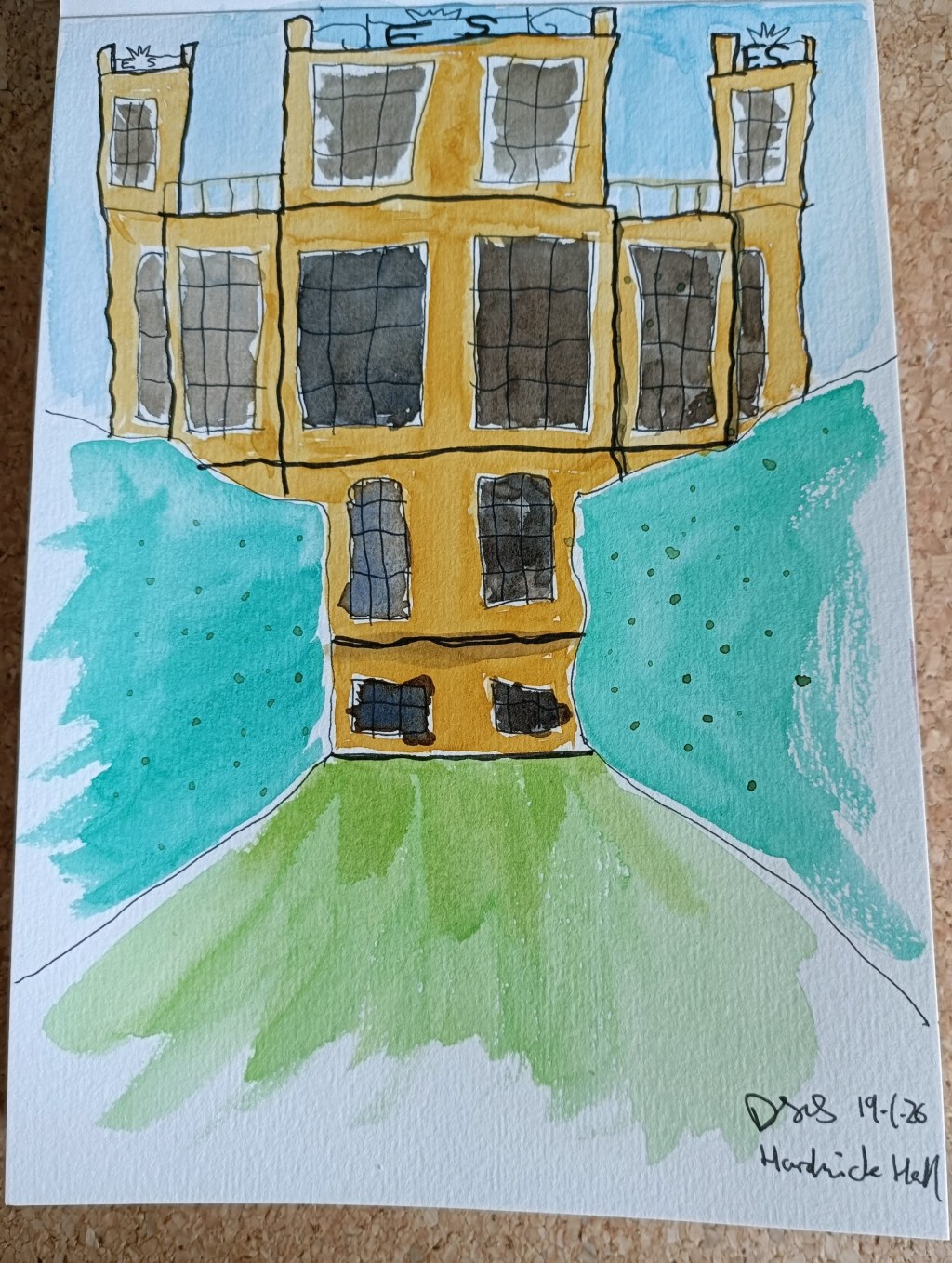
Everyone who grew up near Hardwick Hall, like I did, knows the saying
Hardwick Hall, more glass than wall.
Robert Cecil, 1st Earl of Salisbury, a contemporary of Bess1
It’s a playful little rhyme about Bess of Hardwick’s famous house and its numerous large windows. The windows were a status symbol in Elizabethan England. It’s in this period that the wealthy were moving away from fortified residences and towards stately homes as we think of them today.
Bess was married and widowed four times, with each husband being richer than the last. Upon Bess’s death, the only richer woman in England was Queen Elizabeth. During her lifetime she had litigated, advised on land purchases, built multiple houses and was the matriarch of her dynasty.
This week I learned another, far less well-known rhyme about Bess. In the 18th century, Horace Walpole (author and politician) penned a satirical epigram about her:
Four times the nuptial bed she warm’d,
Horace Walpole
And ev’ry time so well perform’d,
That when death spoil’d each husband’s billing,
He left the widow ev’ry shilling.
It’s witty – funny in its own time, but unfair and not actually true. It reduces one of Elizabethan England’s most formidable women to a caricature of marriage and money. Perhaps it tells you more about Walpole’s attitudes toward ambitious, able women than about Bess herself.
It’s fascinating to see these two couplets side by side. One is affectionate, local, playful, and embedded in memory. The other is literary, cutting, and preserved in letters and gossip. Both endure — one in classrooms and pub quizzes, the other in the notebooks of a mischievous 18th-century aristocrat.
- His original version was “Hardwick Hall? More window than wall.” ↩︎
 Dean Sas
Leave a comment